
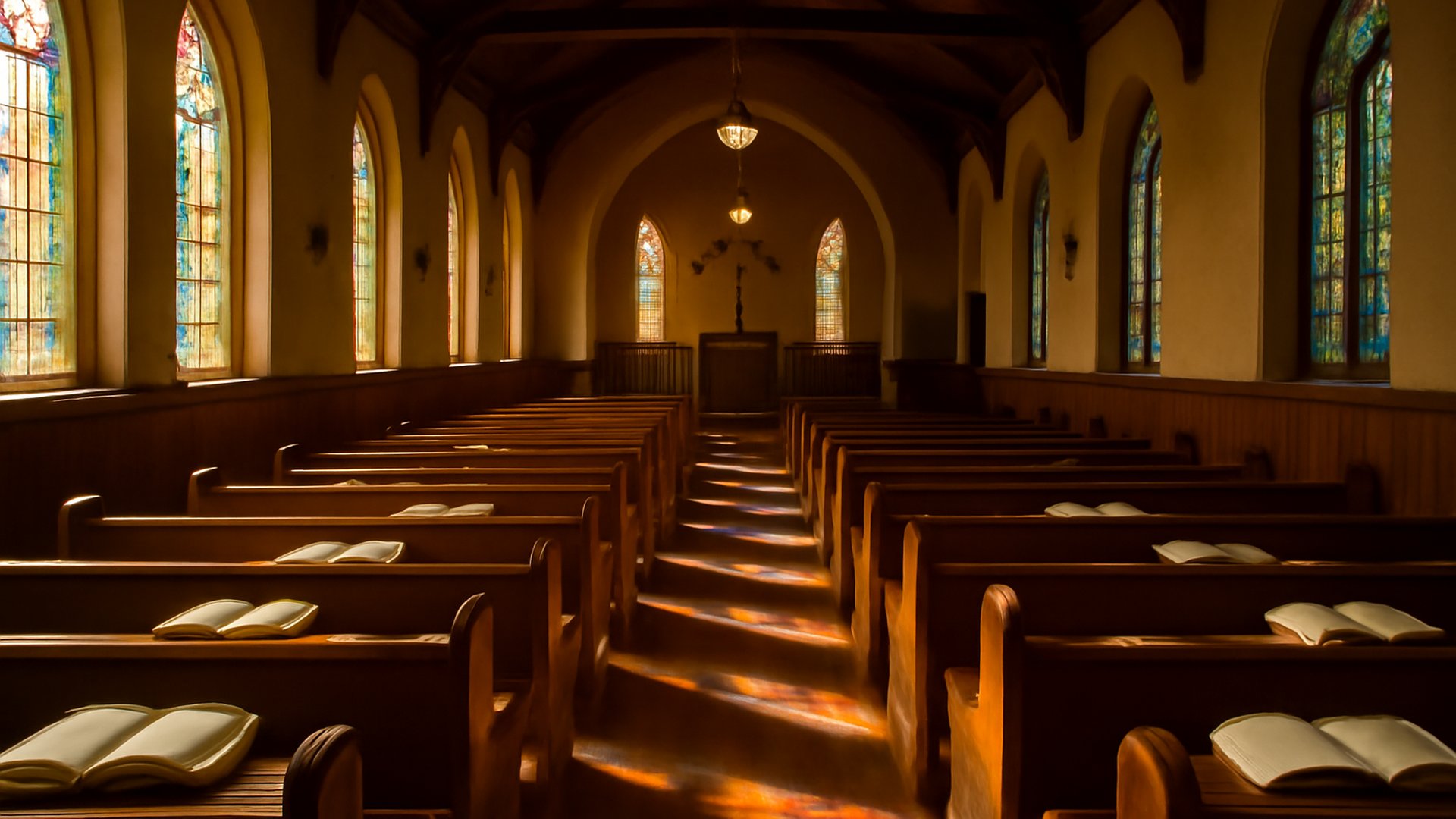
Walking into a church for the first time can feel like turning up at someone else's family reunion. Everyone seems to know when to stand, what to say, and where the restrooms are. You don't, and that's completely fine. Most congregations are glad to see a new face, and nobody expects a visitor to know the routine.
This guide covers what usually happens at a Christian service in the United States, the practical questions people are often too shy to ask, and how traditions differ. Every congregation has its own habits, so treat this as a rough map rather than a rulebook.
Before You Go
Check the church's website or social media page for service times. Many churches hold more than one service, and they aren't always alike: an early service is often smaller and more traditional, while a late-morning one may have a band and a bigger crowd.
The sign out front usually hints at the tradition. Words like Catholic, Baptist, Episcopal, Lutheran, Methodist, or Orthodox each point to a different style of Sunday morning. If the name gives nothing away, the "About" page on the church's website usually will.
Aim to arrive ten to fifteen minutes early so you can park, find the right door, and drop off children if you'd like to use the nursery. Going alone is normal, and so is bringing a friend.
What to Wear
Most American churches are more relaxed about clothes than people expect. In many nondenominational and evangelical congregations, jeans are the norm, pastor included. Catholic, Orthodox, Episcopal, and Lutheran churches tend to lean a little dressier.
A safe rule anywhere is clean, modest, and comfortable, and business casual rarely looks out of place. In Orthodox parishes, modest dress is expected and men remove their hats; some women cover their hair, though visitors usually aren't expected to follow every custom. Anyone who judges a first-time visitor by their clothes is missing the point anyway.
Arriving and Finding a Seat
Many churches have greeters or ushers at the door who will point you to the restrooms and children's area and hand you a bulletin, a printed program for the service. Hang on to it. It usually lists the songs, readings, and spoken responses, and it often explains who may receive communion. Churches without a bulletin usually project the words on screens.
Sit wherever you like. A seat near the back lets you watch what others do, and an aisle seat makes it easy to step out with a restless child.
You may be offered a welcome card asking for your name and contact details. Filling it in is entirely optional; if you'd rather stay anonymous for now, just pass it along.
The Basic Shape of a Service
Christian services vary a lot in style, but most follow a similar pattern with four broad parts:
- Gathering. A welcome, an opening song or hymn, and a prayer.
- The Word. One or more Bible readings and a sermon, which Catholic and some other churches call a homily.
- Response. Prayers for the church and the world, often a creed or statement of faith, the offering, and in many churches communion.
- Sending. A closing blessing, sometimes called a benediction, and a final song.
You'll stand, sit, and sometimes kneel at different points; just follow the people around you. If kneeling or standing is difficult, sitting quietly is always fine. The same goes for singing: join in, or simply listen.
Most services last an hour to an hour and a half. Sermons range from about ten minutes in many liturgical churches to thirty minutes or more in many evangelical congregations, and Orthodox and some Pentecostal services often run longer.
Communion: What Visitors Should Know
Communion, also called the Eucharist or the Lord's Supper, is what first-time visitors worry about most, because practice really does differ between churches. Here is a general guide, though individual congregations vary:
- Catholic. Communion is reserved for Catholics who are prepared to receive it. Visitors are welcome to stay seated and pray, and in many parishes non-Catholics may come forward with arms crossed over the chest to receive a blessing instead.
- Orthodox. Communion is for Orthodox Christians. At the end of the service, visitors are usually welcome to take a piece of blessed bread, called antidoron, as a sign of fellowship.
- Episcopal. Baptized Christians from any church are generally welcome to receive.
- United Methodist. Methodists describe an "open table," inviting all who seek to respond to Christ's love.
- Lutheran. It depends on the church body. Many ELCA congregations welcome all baptized Christians, while Missouri Synod (LCMS) congregations practice close communion and ask visitors to speak with the pastor first.
- Baptist and many evangelical churches. Communion may be monthly or quarterly rather than weekly and is usually open to anyone who professes faith in Christ. The bread and cup are often passed along the rows on trays.
When in doubt, check the bulletin or quietly ask an usher. Staying in your seat is always fine, and nobody will think twice about it.
The Offering
A plate or basket will probably come down your row at some point, or there may be a box near the door. Visitors aren't expected to give, and many pastors say so from the front. Just pass the plate along.
How Different Traditions Compare
Christian worship in the US covers a wide range of styles. These sketches are general, and every tradition has exceptions. For a broader look at how faiths are practiced, see our guide to the aspects of religion.
Catholic Mass
The Mass follows a set order that is much the same in every parish, with Scripture readings, a short homily, and the Eucharist at its center. Expect spoken responses and a rhythm of standing, sitting, and kneeling over about an hour.
Orthodox Divine Liturgy
Orthodox worship is ancient, almost entirely sung, and full of icons, incense, and candles. People often stand for much of the service, though seating is usually available, and the liturgy commonly runs around ninety minutes.
Mainline Protestant
Episcopal, Lutheran, Methodist, and Presbyterian churches usually follow a printed order of worship with hymns, set prayers, readings, and a sermon. The style can be formal, with organ and choir, or more contemporary.
Baptist and Evangelical
The sermon sits at the center, usually after a block of congregational singing, and preaching tends to be longer and practical. Music ranges from hymns with piano to a full worship band.
Pentecostal and Charismatic
Worship is often more expressive. People may raise their hands, call out "amen," or pray aloud together, and some pray in tongues. No one will expect you to join in, and quietly observing is perfectly fine.
Nondenominational
Churches without a denominational label are now common across the US. Expect a band, lyrics on screens, a casual dress code, and often a clearly marked welcome area for guests.
Quaker Meeting
In a traditional, unprogrammed Quaker meeting there is no pastor or set order. People sit in silence, usually for about an hour, and anyone who feels moved may stand and speak briefly. Visitors are under no obligation to say anything.
Bringing Children
Most churches welcome children in the service, and many also offer a staffed nursery and age-group classes during the sermon. Larger churches often use a check-in system that prints matching tags for parent and child, so only you can collect them. That's a standard safety measure, not a sign of suspicion.
Keeping your children with you is always an option too. If you'd like to continue the conversation at home, our parent's guide to family devotionals has simple ideas for every age.
After the Service
Many churches serve coffee afterward, and the pastor may greet people at the door. Stay and chat, ask a question, or head straight home; all of those are fine.
One visit is only a snapshot. A church can feel quite different on a holiday or with a guest preacher, so many people try a congregation a few times before deciding. If you're curious why gathering in person matters so much to Christians, we explore that in why Sunday worship still matters.
Sunday morning isn't the only way in, either. Many congregations run picnics, service days, and trips that make it easy to meet people. Our list of church outing ideas shows what that can look like.
Frequently Asked Questions
Do I have to be a Christian to attend a church service?
No. Nearly every church welcomes visitors of any faith or none. You can sit, listen, and observe without taking part in anything you're not comfortable with.
Will I be singled out as a visitor?
Rarely. Some churches invite guests to raise a hand or stand for a welcome, but you can always stay seated. Most simply greet everyone together.
Can I take communion as a visitor?
It depends on the church. Episcopal and United Methodist churches generally welcome visitors, while Catholic and Orthodox churches reserve communion for their own members. If you're unsure, staying seated is always acceptable.
Is it rude to leave a church service early?
Not if you do it quietly. If you think you may need to slip out, sit near the back or on an aisle.
Conclusion
Your first church service will probably feel a little unfamiliar, and that's normal. Arrive a few minutes early, follow the people around you, and don't worry about getting every detail right. Most congregations remember what it was like to be new, and many will be genuinely glad you came.
You might also be interested in the following: